Every shipment decision starts with the same fundamental question: How fast do I need it, and what am I willing to pay? For importers, freight forwarders, and e-commerce brands managing global supply chains, the sea versus air freight debate isn’t academic—it’s a daily calculation that directly impacts margin, inventory turns, and customer satisfaction. While both modes have evolved considerably in recent years, understanding the true operational and financial trade-offs requires looking beyond advertised transit times and getting into the granular details of container dimensions, Incoterms, customs protocols, and hidden surcharges.
The Cost Reality: More Than Just Rate Per Kilo
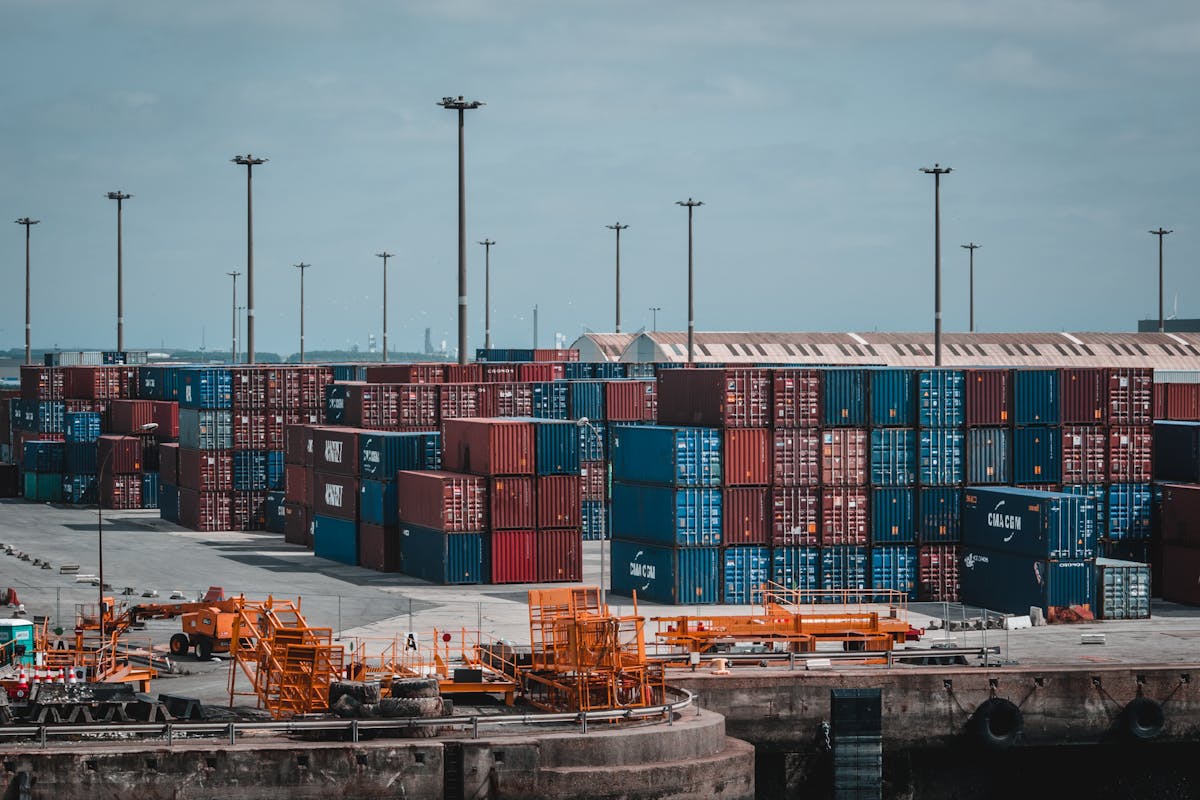
Ocean freight remains the workhorse of global trade for good reason. A standard 20-foot container (TEU) measuring 19’4″ x 7’9″ x 7’10” can hold approximately 28-33 cubic meters of cargo, while a 40-foot high cube offers around 67-76 cubic meters. Current ocean freight rates from Shanghai to Los Angeles run approximately $1,500-$2,800 per FEU (forty-foot equivalent unit), depending on carrier, season, and service level. That translates to roughly $0.15-$0.35 per kilogram for dense cargo utilizing full container capacity.
Air freight costs tell a different story. Standard commercial air cargo rates on the same Shanghai-LAX lane range from $3.50 to $8.00 per kilogram, with express services pushing above $10.00/kg. For a 500kg shipment of consumer electronics, you’re looking at $1,750-$4,000 by air versus $75-$175 as part of an LCL (less than container load) ocean consolidation. The cost multiplier is typically 10-25x in air’s disfavor.
But smart logistics professionals know the full picture includes more than line-haul rates. Ocean shipments accrue port handling charges, chassis fees, demurrage if containers aren’t returned promptly, and potential drayage costs that can add $400-$800 to the total landed cost. Air cargo involves terminal handling charges (THC), security surcharges, and fuel adjustments, but these ancillary fees typically represent 15-25% of the base rate versus 30-50% for ocean. When calculating under CIF or DDP Incoterms, these differences become critical to accurate costing.
Transit Time: The Speed Premium Explained
Standard ocean transit from Asia to the U.S. West Coast runs 14-18 days port-to-port, with East Coast destinations adding another 10-14 days via Panama Canal routing or requiring intermodal rail connections that extend total door-to-door time to 25-35 days. Asia-Europe lanes typically require 28-35 days ocean transit. Add customs clearance, destination port congestion, and final-mile delivery, and you’re often looking at 35-50 days total elapsed time from factory to warehouse.
Air freight shrinks this dramatically. The same Asia-U.S. lane takes 1-3 days for airport-to-airport transit, with total door-to-door delivery typically completed in 5-8 days including customs clearance. For time-sensitive goods—product launches, seasonal merchandise with hard retail deadlines, or replacement parts for manufacturing lines—this speed advantage can justify the exponential cost increase.
As Moose Worldwide Digital recently covered in their supply chain disruption series, the pandemic revealed how transit time variability matters as much as average speed. Ocean schedules experienced 200-300% volatility during peak congestion periods, while air freight maintained relative consistency despite capacity constraints.
Operational Considerations: Documentation and Customs
Both modes require similar core documentation—commercial invoices, packing lists, and bills of lading (or airway bills for air)—but the customs clearance experience differs. Ocean freight typically clears through CBP (U.S. Customs and Border Protection) while cargo is still in transit or immediately upon vessel arrival, using ISF (Importer Security Filing) data submitted 24 hours before loading. Air cargo clears post-arrival, often within hours, but benefits from streamlined processes at dedicated air cargo facilities.
HS codes (Harmonized System classification) drive duty calculations identically across both modes, but the speed of air freight can reduce exposure to sudden tariff changes or quota fills. For importers managing compliance across multiple product categories, maintaining visibility into these processes has become essential—many are now using an AI tweet generator for logistics commentary to keep stakeholders informed of customs delays or regulatory changes in real-time.
Strategic Mode Selection: Making the Right Call
The sea versus air decision shouldn’t be binary. Sophisticated supply chain operations use a hybrid approach: ocean freight for base-level inventory replenishment and predictable demand, with air freight reserved for demand spikes, stockout prevention, and high-value, low-weight products where the freight cost is absorbed easily by product margin.
Products with high value-to-weight ratios—semiconductors, pharmaceuticals, fashion accessories—often justify air freight economically. Bulk commodities, furniture, automotive parts, and anything where freight exceeds 5-8% of landed product value typically demands ocean routing. The calculation must also factor inventory carrying costs: capital tied up in 45-day ocean transit has an opportunity cost that can partially offset air freight’s price premium.
The freight mode decision ultimately comes down to understanding your total landed cost, your working capital position, and your customer’s actual delivery expectations. Neither sea nor air is universally superior—the best logistics professionals master both, maintaining carrier relationships and operational expertise across modes to deploy the right solution for each unique shipment requirement.